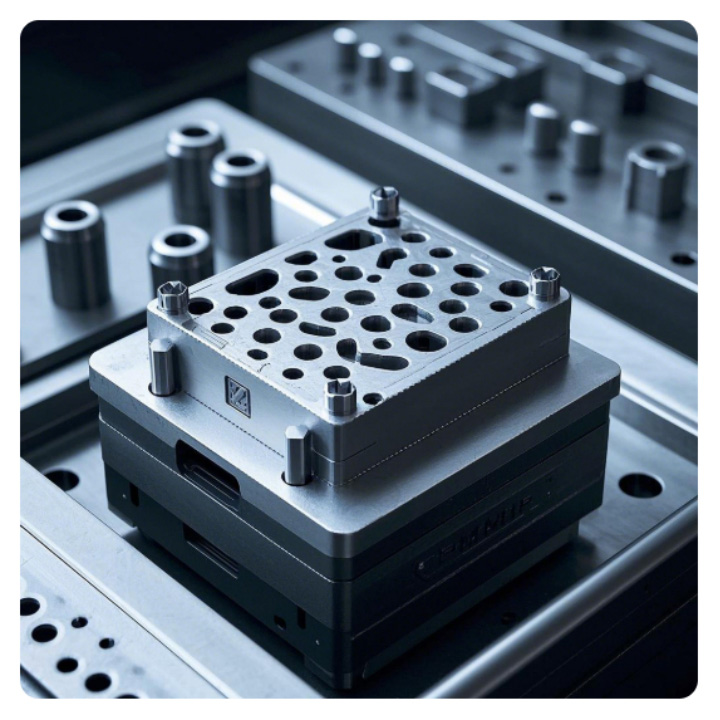
In the field of injection mold manufacturing, the design of venting systems is critically important. During high-speed injection molding, trapped air inside the mold cavity will cause common defects on plastic parts such as air bubbles, weak weld lines, blurred surface profiles and incomplete filling.
Traditionally, porous vent steel is adopted for venting on mold cavities and cores. Made of sintered spherical alloy particles, this material features a porous structure that allows air to pass through. However, conventional processing methods including powder metallurgy and diffusion welding can only produce vent steel inserts. For molds with complex or special structures, such solutions often fail to deliver satisfactory venting performance and production efficiency.
In recent years, metal 3D printing has brought a breakthrough to the problem of trapped air in molds. With optimized structural design and process parameters, integrated molds with built-in venting systems can be directly fabricated. The venting sections connect seamlessly with the main mold body. No additional vent inserts are required, which ensures efficient air release while maintaining reliable mold performance.